Project Introduction
SwiftSort was a semester-long team design competition completed as part of Introduction to Mechanical Design. The objective was to design, manufacture, and test an autonomous device capable of separating randomly loaded ping-pong balls and wooden disks into designated collection zones.
The project challenged our team to develop a functional solution within strict size, weight, operational, and testing constraints. Throughout the semester, we progressed through concept development, CAD modeling, prototyping, manufacturing, testing, and design refinement before competing with our final device.
Project Requirements
- 20 Objects | 10 Balls + 10 Disks
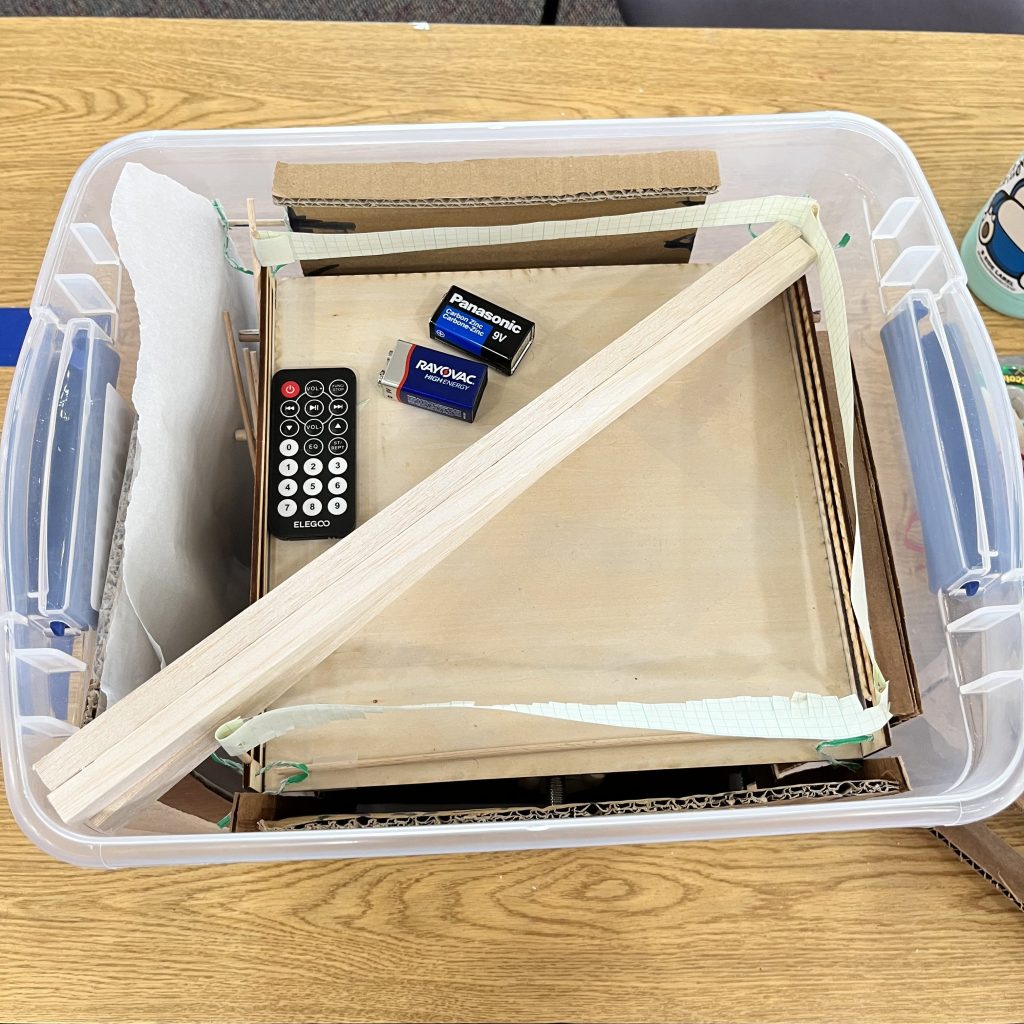
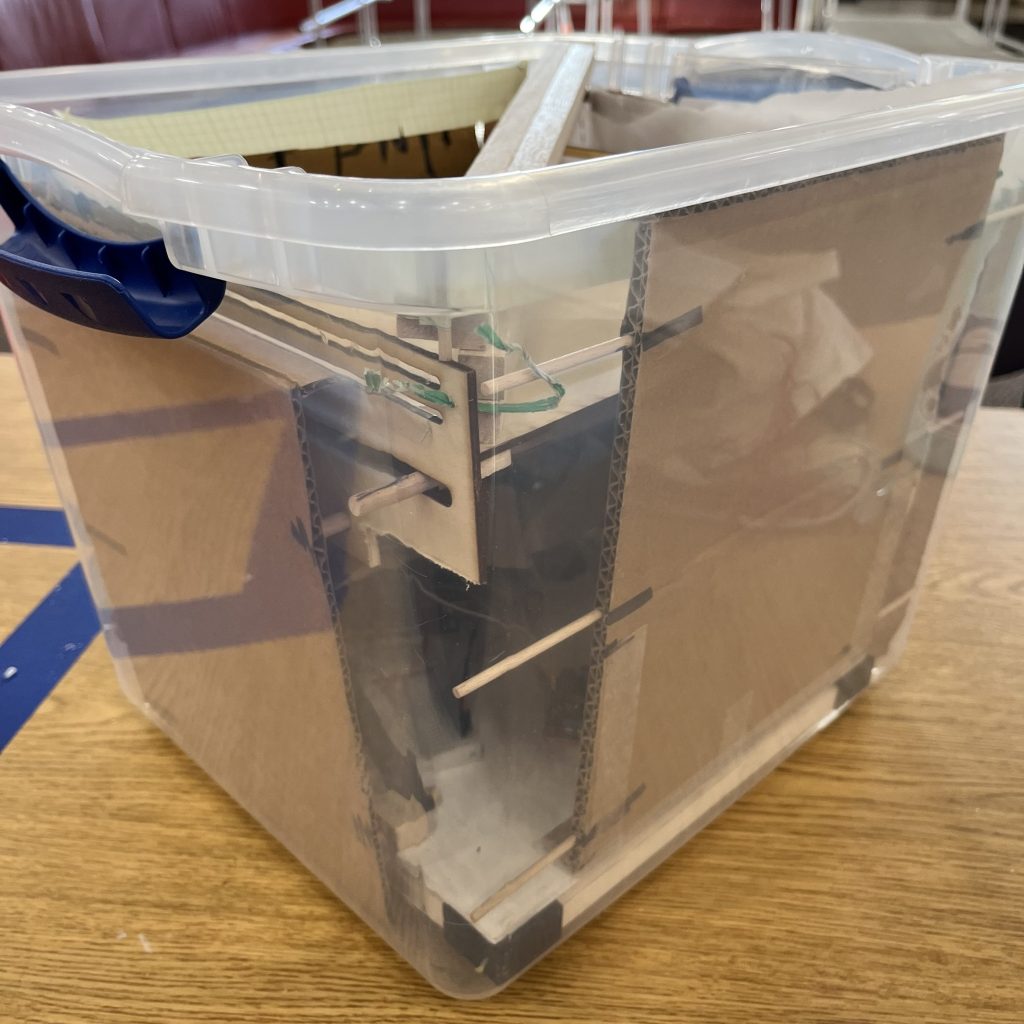
- Size | Must Fit in Specific Storage Bin
- 1 × 1 ft | Operating Footprint
- 2.5 lb | Maximum Device Weight
- 60 sec | Test Run
- Autonomous | No Physical Interaction After Initiation
Design & CAD
The Design Process:
The design process required several iterations as our team refined the device to best meet our goals. Our initial priority was developing a reliable, functional system before shifting our focus toward maximizing the competition score.
Key design considerations included minimizing weight, maintaining a simple structure, and allowing for easy assembly and operation. These priorities guided our decisions throughout the development and testing process.
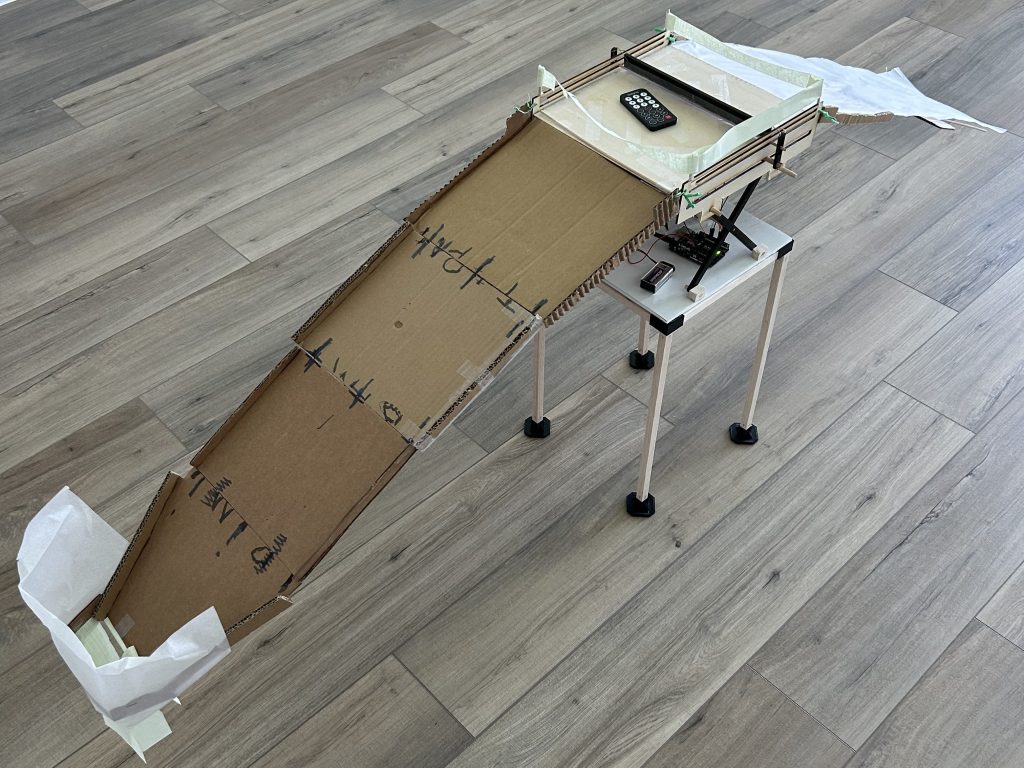
The device uses a motor-driven wiper system to separate and direct the two types of objects. As the wiper travels across the upper tray, it pushes the ping-pong balls into their designated chute. The wiper then drops onto a lower track, reverses direction, and collects the disks, directing them down the opposite chute. Motor operation and direction were controlled using an IR remote system.
The photo below shows our most successful design iteration, which operated reliably during testing. With a functional design established, our team shifted its focus toward optimization and maximizing our final competition score.
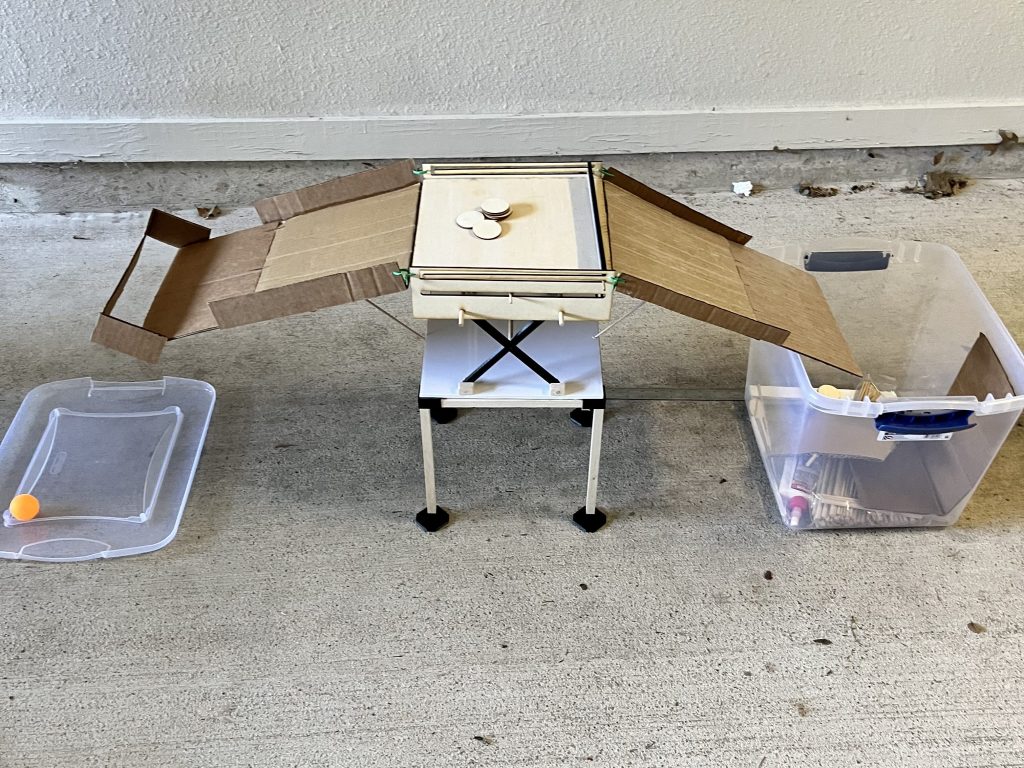
Our final design (top of the page) came in weighing 29 oz, the device successfully separated the ping-pong balls and disks into their designated zones just over 24 inches away in under 30 seconds. These results placed our team well above the average scoring range for the competition.
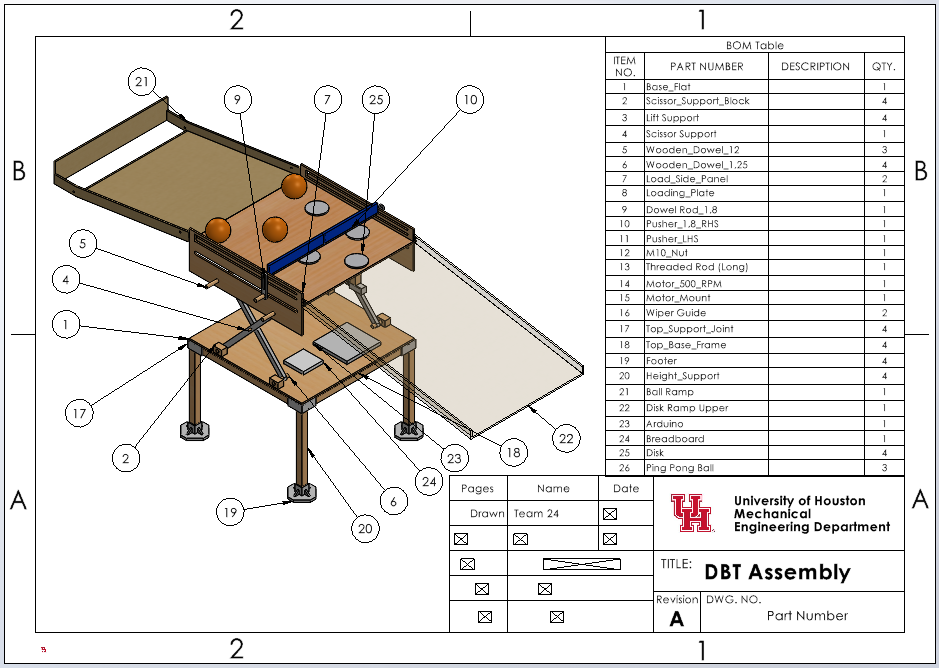
The Bill of Materials reflects our emphasis on selecting lightweight materials while maintaining sufficient strength for operation. As the design evolved, several components were modified to reduce weight and improve overall performance.
The original disk chute was replaced with a combination of wooden dowels and parchment paper, providing a smoother sliding surface for the disks while significantly reducing weight and increasing travel distance. Additionally, the wooden platform supporting the Arduino and motor controller was replaced with foam board, further reducing the overall weight of the device.

